Maracanã stadium tour and match day: a visitor's guide
Tour prices, hours and what you see inside, plus how to get to the Maracanã by metro and buy match tickets without getting scammed.
Tour do Maracanã e dia de jogo: guia do visitante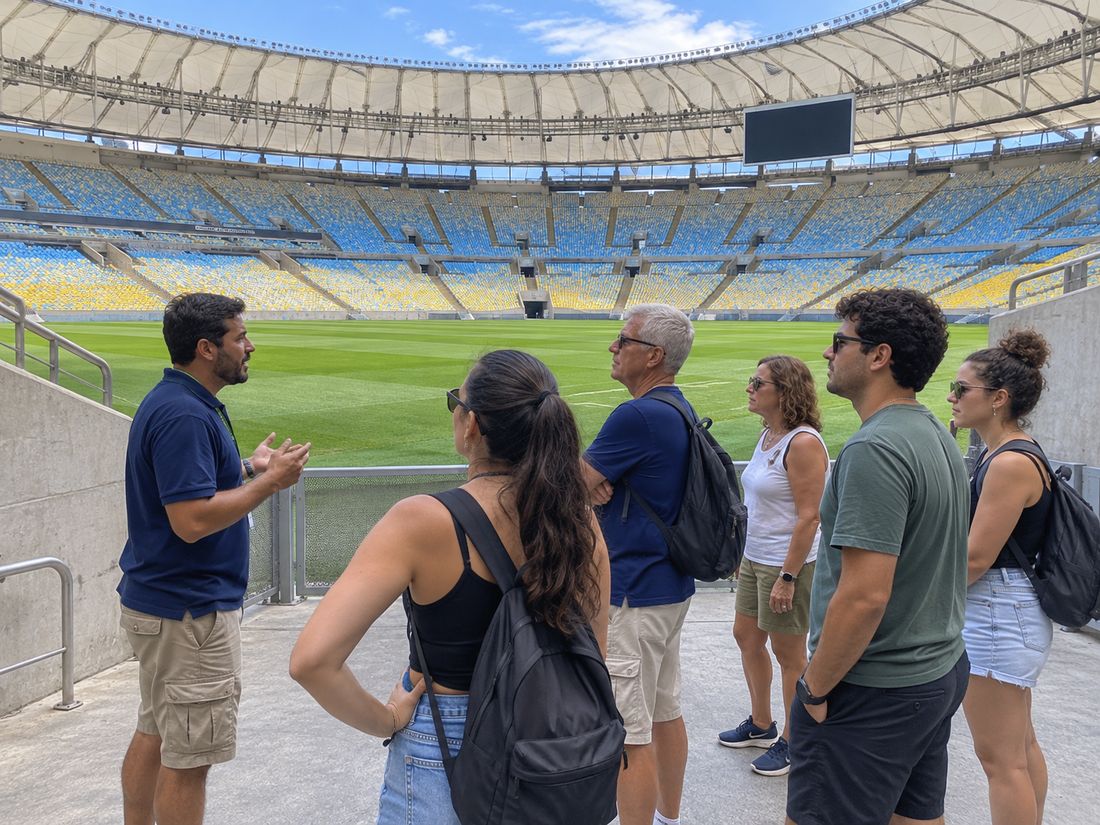
This guide contains affiliate links. If you buy through them, BrazilTube may earn a small commission at no extra cost to you. How we handle affiliate links.
For anyone who loves football, the Maracanã is the one stadium in Brazil you have to see. It is where Brazil lost the 1950 World Cup, where Pelé scored his 1,000th goal and where Germany won the 2014 final. You can visit two ways: on the daytime stadium tour, or by going to a Flamengo or Fluminense match with 60,000 people singing. Ideally, do both.
A short history
The stadium was built for the 1950 World Cup, the first Brazil hosted, and it opened unfinished on June 16, 1950. Its official name is Estádio Jornalista Mário Filho, after the journalist who campaigned for it, but everyone uses the name of the river and neighborhood around it. According to Viaja con Gus, the decisive 1950 match against Uruguay drew about 173,850 paying spectators, with close to 200,000 people estimated inside. Brazil needed only a draw and lost 2–1, a defeat still known as the Maracanazo.
For decades the Maracanã was the largest stadium in the world. It was almost entirely rebuilt between 2010 and 2013 for the 2014 World Cup, with seats replacing the old standing terraces, a roof over every stand and a capacity of about 78,000. It hosted that tournament's final and the opening and closing ceremonies of the 2016 Olympics.
The stadium tour
| Item | Detail (2026) |
|---|---|
| Adult ticket | R$115, same price online and at the box office |
| Half price | R$57.50 for students with ID, children 3 to 11, over-60s, people with disabilities and Rio public school staff |
| Free | Children under 2 and licensed tour guides |
| Tour hours | 9:00 to 17:00; box office 8:30 to 16:30 |
| Duration | About 1.5 hours |
Prices and hours from Viaja con Gus, which verified them against the official Tour Maracanã site. Some reseller sites still show an older R$94 fare, so check the official site, tourmaracana.com.br, when you book.
The route covers the stands and boxes, the press room and mixed zone, the changing rooms, the players' tunnel and the edge of the pitch behind the benches. It finishes at the Calçada da Fama, a walk of fame with concrete casts of the feet of Brazilian and international stars.
Getting there
Take the metro. Line 2 stops at Maracanã station, practically at the stadium entrance. From Copacabana or Ipanema the trip takes about 30 to 40 minutes with one change, and the single fare has been R$7.90 since April 12, 2026, per Viaja con Gus. On match days the metro is by far the best option, because traffic around the stadium stops completely.
If you drive to the tour, there is visitor parking at Gate 2 for R$35 per car.
Going to a match
The tour is good. A match is unforgettable. Flamengo and Fluminense both play their home games at the Maracanã, so in season there is usually a game within any week-long stay.
- The stadium doesn't sell match tickets. Tickets come from the clubs' official channels, or from the organizer for Seleção matches and finals. Club members get priority before general sale.
- Never buy at the gate. Resale outside the stadium is illegal and a major source of fake tickets.
- Pick a central, numbered section on your first visit. The supporters' ends are standing-room in practice and intense.
- Know which club you're sitting with. Big derbies sometimes allow only one team's fans, and wearing the wrong colors in the wrong section is a bad idea.
- Travel light. Bring a phone, a card and an ID. Bags are searched, and large ones aren't allowed.
What to wear
A club shirt is the easiest way to fit in on match day, and Brazil's yellow shirt is welcome anywhere outside a club derby. If you want one, Flamengo shirts, Fluminense shirts and Seleção shirts are all on Amazon, but check sizing, because Brazilian cuts run small.
Make a day of it
The stadium sits next to the Quinta da Boa Vista park, which makes a relaxed morning before an afternoon tour. If you're following the national team, our look back at Brazil's 2026 World Cup and our November friendlies recap will catch you up on the Seleção.