Money in Brazil: Pix, cards and cash for visitors
How Brazilians actually pay, why Pix matters to visitors, what the tourist Pix apps do, and how much cash to carry.
Dinheiro no Brasil: Pix, cartão e espécie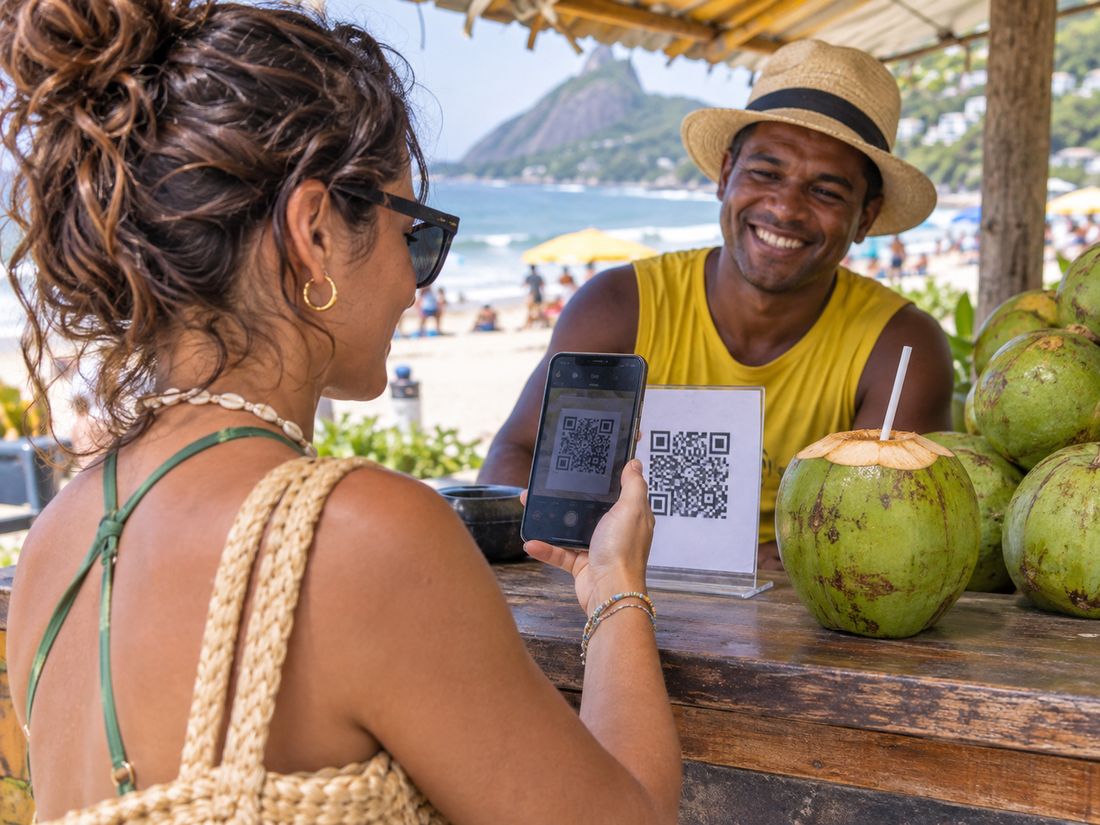
This guide contains affiliate links. If you buy through them, BrazilTube may earn a small commission at no extra cost to you. How we handle affiliate links.
Brazil is one of the most cashless countries you can visit, but not in the way Americans expect. Credit cards work in most restaurants, hotels and shops. The thing that catches visitors out is Pix, the instant payment system almost every Brazilian uses many times a day. This guide explains what Pix is, how a visitor can use it, and how to split your money between Pix, cards and cash.
What Pix is
Pix is a free, instant bank transfer system run by Brazil's Central Bank. You pay by scanning a QR code or entering a key such as a phone number, and the money arrives in seconds. A street vendor, a beach chair rental or a friend splitting a dinner bill will often ask "Pix?" before you even reach for a card.
The catch for tourists is access. As the payments company Moreta Pay explains, Pix moves money between accounts at Brazilian institutions, and opening one of those accounts normally requires a CPF (Brazil's taxpayer number), a local address and a Brazilian phone number. Most short-term visitors have none of the three.
How visitors can use Pix
A newer category of apps fixes this. They let you verify your identity with a passport, load money from your home bank or card, and pay Brazilian Pix QR codes in reais. Two examples that publish how they work are Liminal, which says you can set it up at home before the flight and pay with mobile data or Wi-Fi without a Brazilian SIM, and Moreta Pay, which lists a limit of R$16,000 per payment and R$32,000 per week.
We are not endorsing a specific provider, and BrazilTube has no commercial relationship with either. Before you pick one, compare three things:
- The exchange rate it applies at the moment you pay, compared with the mid-market rate.
- Top-up fees for loading money by bank transfer versus card.
- Refunds for leftover balance at the end of the trip.
Cards: what works and where
Visa and Mastercard are accepted in most of urban Brazil, from supermarkets to taxis and app rides. Contactless payment is common. A few habits save money and headaches:
- Use a card with no foreign transaction fee. On a two-week trip, a 3% fee adds up quickly.
- Always pay in reais. If a card machine offers to charge you in dollars, decline. The conversion rate the machine offers is almost always worse than your bank's.
- Expect "crédito ou débito?" The cashier will ask whether you're paying by credit or debit. Foreign cards usually go through as credit.
- Bring two cards from different networks, kept in different places, in case one is blocked or lost.
Cash: how much to carry
You will need less cash than you think, but not zero. Cash still helps for small purchases in markets and beach towns, for tips, and anywhere the card machine has no signal. Our approach is to withdraw a modest amount from a bank ATM inside a shopping mall or airport during the day, and refill when needed rather than carrying a large sum.
In big cities, don't walk around with your full trip budget. Keep a day's cash in your pocket and the rest, with a backup card, in the hotel safe.
A simple split that works
| Situation | Best way to pay |
|---|---|
| Hotels, restaurants, shops, flights | Card with no foreign transaction fee, charged in reais |
| Beach kiosks, street food, small vendors | Pix through a visitor app, or small cash |
| Uber or 99 rides | Card saved in the app |
| Tips, small markets, remote villages | Cash |
| Park tickets, such as Iguaçu | Card on the official website, booked ahead |
Phone, data and battery
Pix, ride apps and maps all depend on your phone, so your phone becomes your wallet. Buy an eSIM data plan before you land, and carry a power bank on long days. A dead battery at a beach kiosk means no Pix, no ride home and no map. A slim 10,000 mAh model is enough for a full day: see portable chargers on Amazon.
Before you go, make sure your passport side is sorted too. Our e-Visa guide covers the application step by step.